Not really. But you can sharpen badly, and you can wear a blade down faster than you need to. People mix up the two.
What people mean by over-sharpening
People usually worry about one of two things. One is removing too much metal and sharpening the blade away. The other is that sharpening too often hurts the edge.
The first worry is real but overstated. Sharpening removes metal. A knife sharpened daily on a coarse stone wears faster than one sharpened weekly on a fine stone. Even so, a good blade takes a very long time to wear away. The question is whether you use the right tool for the job, not whether you sharpen too often.
The second worry is mostly wrong. A sharp knife on a good cutting board stays sharp longer than a dull one, because you do not press harder to make up for it. The goal is a sharp edge, not rationing sharpenings.
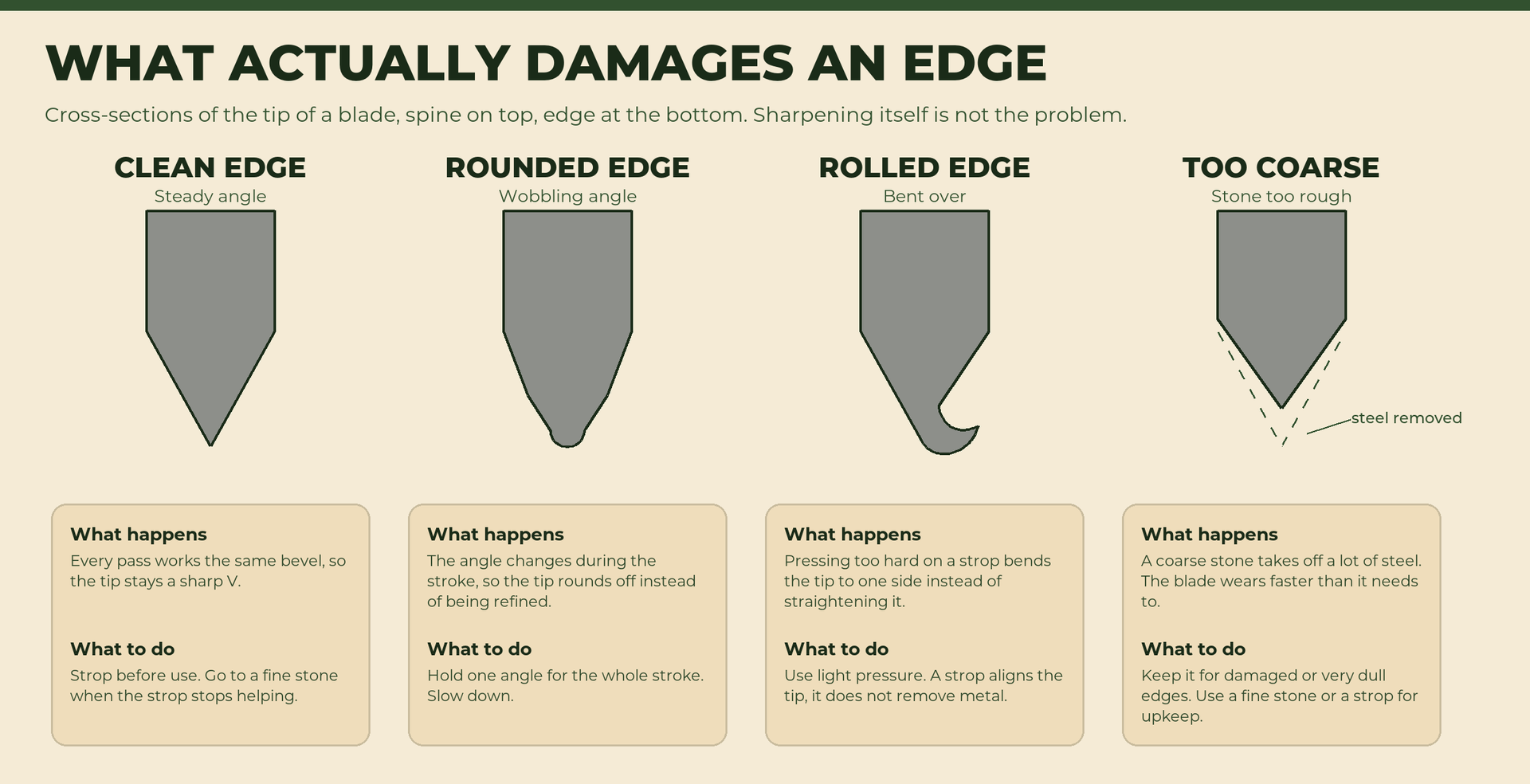
What actually damages an edge
Wrong angle. The angle is the slant at which you hold the blade on the stone. If it wobbles, you round the edge instead of refining it. After enough wobbly sharpenings the edge geometry gets worse. That is imprecise sharpening, not over-sharpening.
A stone that is too coarse. A coarse stone removes metal fast, which suits a damaged or very dull edge and wastes steel on a touch-up. For upkeep, a fine stone or a strop is almost always right. A strop is a strip of leather that aligns the very tip of the edge.
Stropping too hard. A strop aligns the tip and removes no metal. Pressing hard rolls the edge over, which means the tip bends to one side, instead of straightening it.
The practical answer
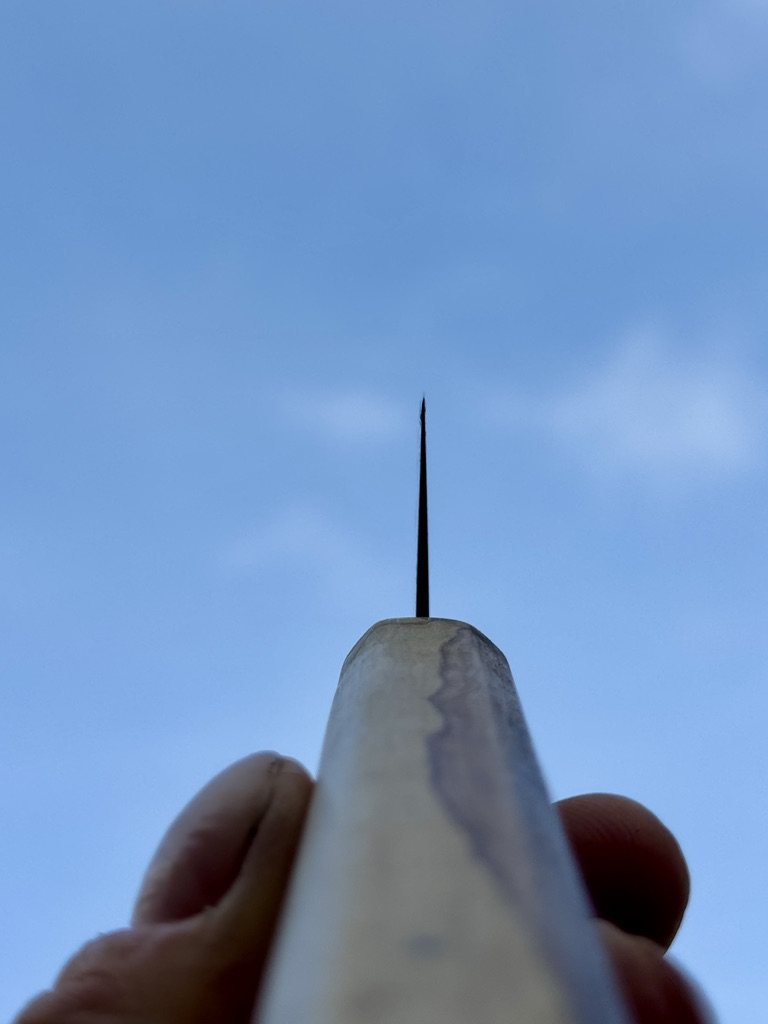
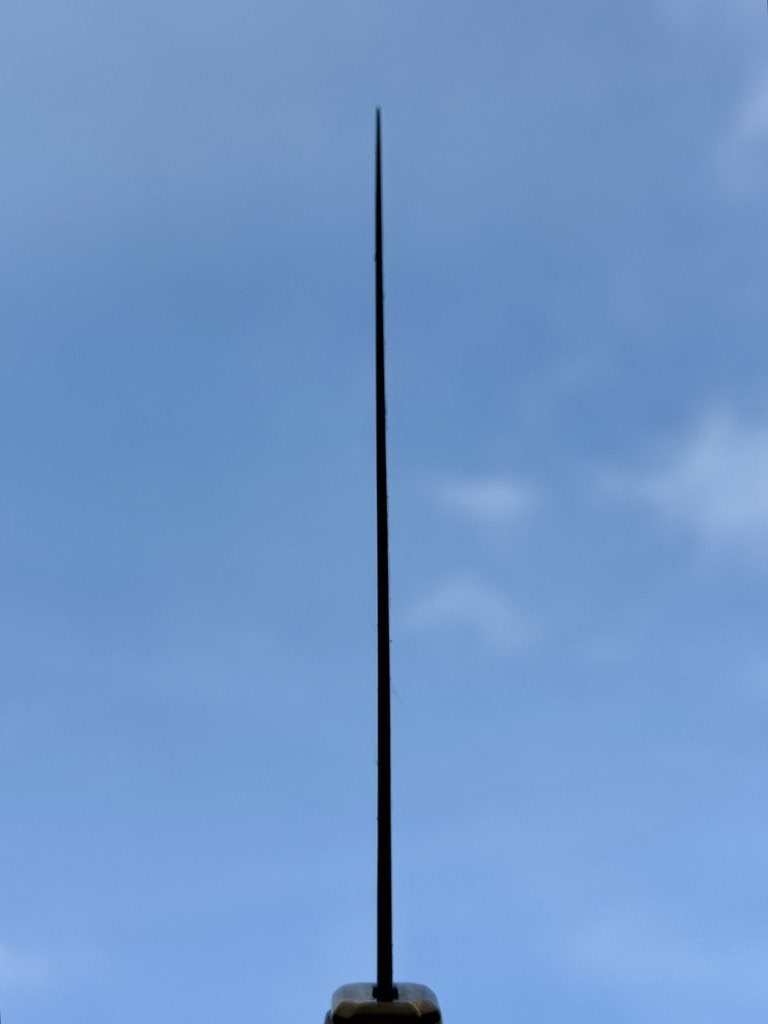
Strop before every use. Sharpen on a stone when the strop stops helping, which happens less often than you would expect. Use the finest stone that does the job.
If you do this and the edge still gets worse over time, frequency is not the problem. Technique is, and most likely an inconsistent angle.
More on maintenance in my knife care guide.