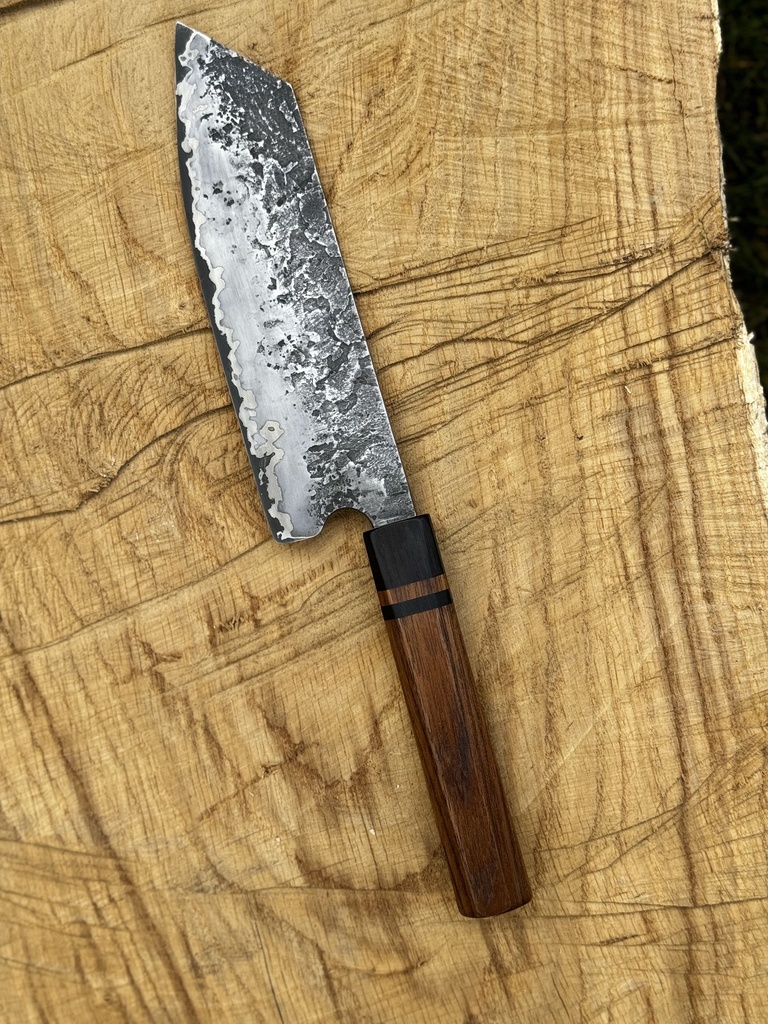
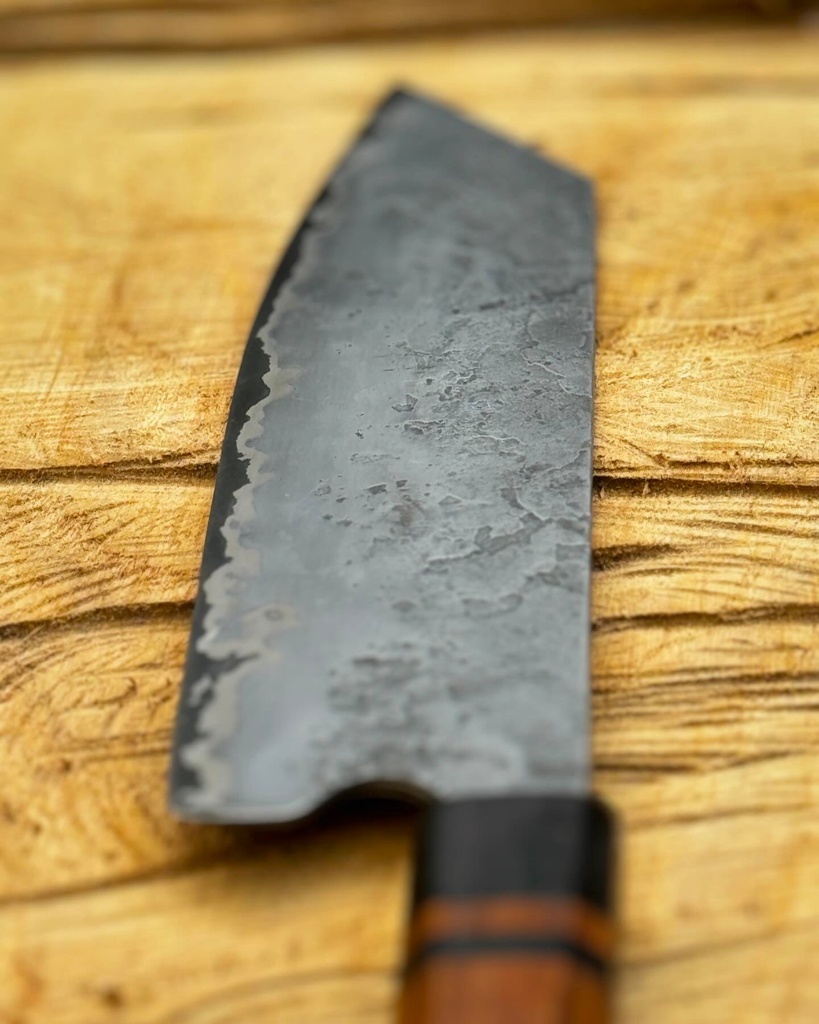
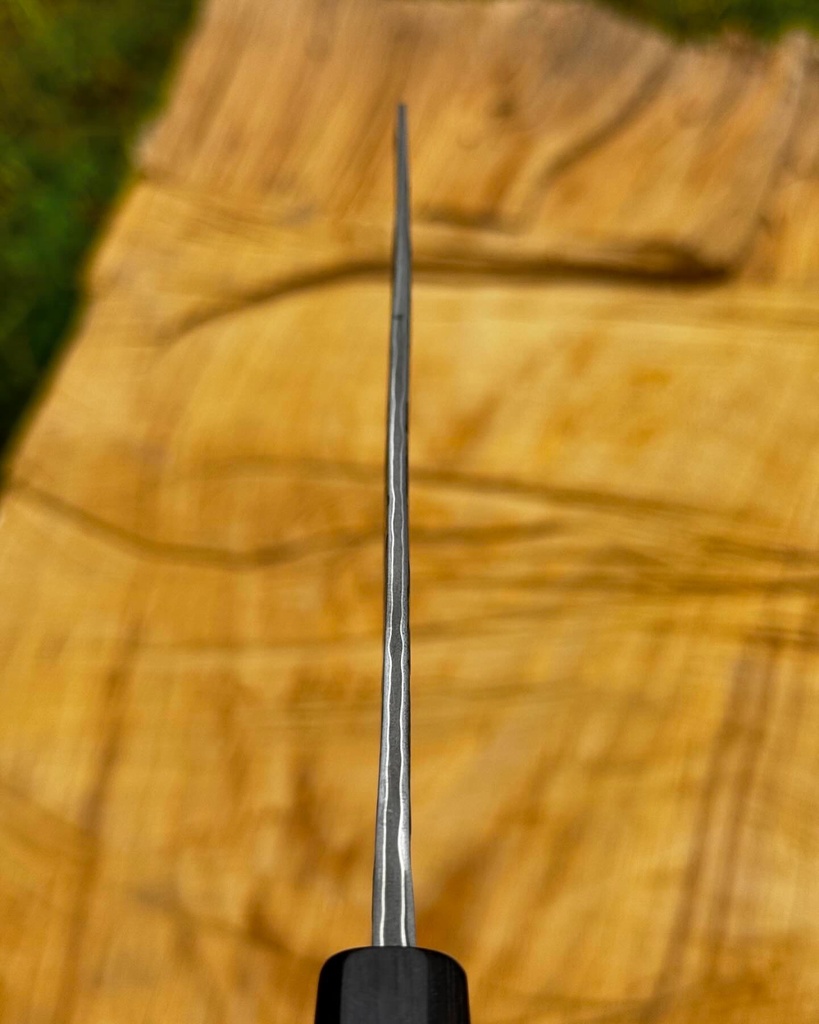
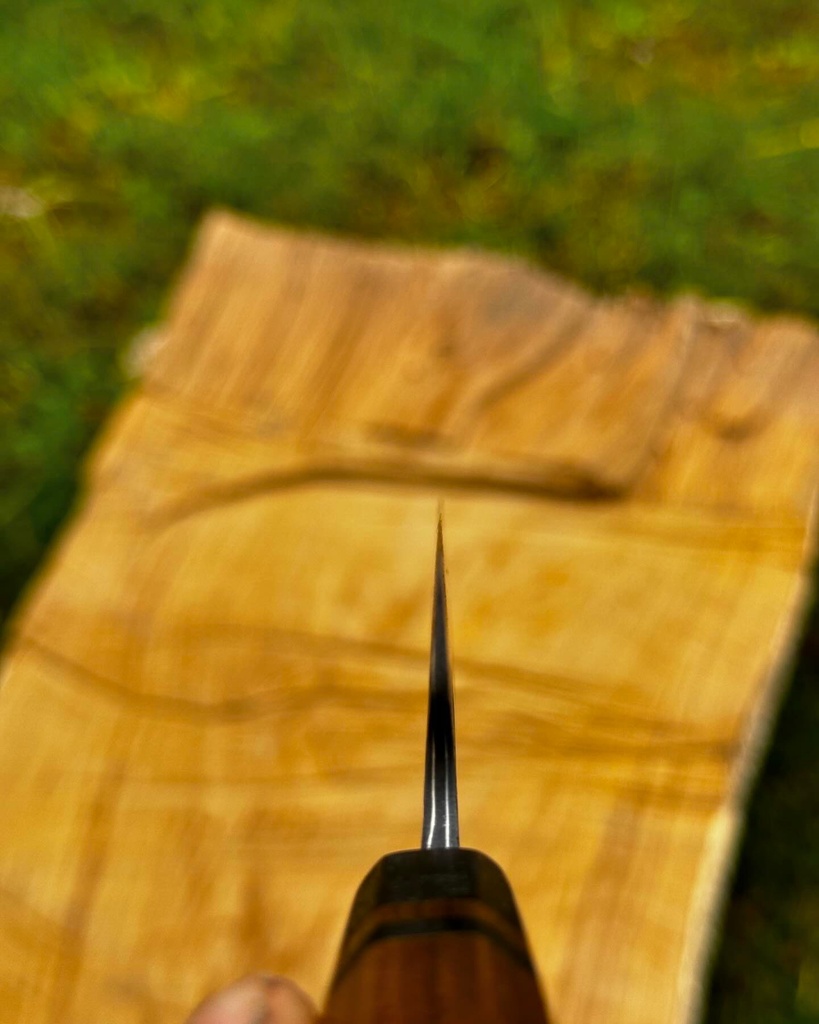
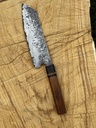
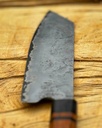
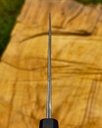
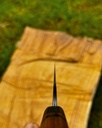
My first Go-mai knife, a chef's knife forged by hand in Groningen. Go-mai is five layers: a hard 80CrV2 core (a high-carbon steel with chromium and vanadium that takes a fine edge and rusts if you leave it wet), a thin layer of nickel on each side of it and cladding on the outside. I etched it in coffee. The tip is a K-tip, an angled point in the style of the Japanese kiritsuke (a straight edged knife with a slanted tip) that suits fine work like scoring and trimming. This is also the first blade where I forged a distal taper: the blade gets thinner toward the tip, so the tip is light and the weight stays near the handle. The handle is teak with African blackwood, and the ferrule (the ring between blade and handle) is African blackwood too. This one is sold out, but you can commission something similar.
Care
Wash by hand and dry the knife after use, with the cotton cloth it came in or a dishcloth. Carbon steel can rust and discolour. The darker layer that forms is called patina, and it protects the steel and gives your knife its character. Never leave acids on the blade, they discolour it and destroy the patina. Hone the edge with a honing steel just before or right after use.