If you're just getting started with knife-making, one of the first big decisions you'll face is choosing the right steel. It can feel overwhelming — there are dozens of options out there, each with different properties, and everyone seems to have a strong opinion. When I started forging, I spent hours reading about carbon content, alloy elements, and heat treatment charts before I ever lit the forge. In this post, I want to cut through the noise and share what I've learned about picking a steel that's forgiving, rewarding, and practical for your first blade.
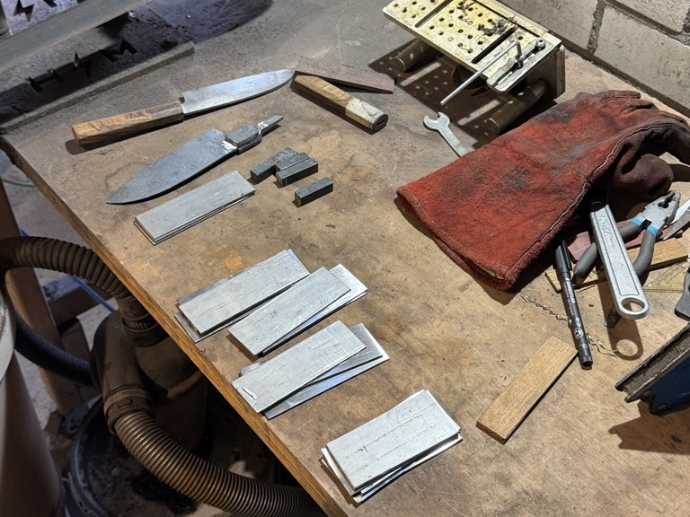
Why Steel Choice Matters
The steel you choose affects everything about your knife — how it holds an edge, how tough it is, how easy it is to sharpen, and how forgiving it is during heat treatment. Pick something too complex for your first blade, and you might end up with cracked steel and a lot of frustration. Pick something too simple, and you might not get the performance you were hoping for.
For a beginner, the sweet spot lies in finding a steel that moves well under the hammer, responds predictably during heat treatment, and still produces a blade you can be proud of. Fortunately, there are a handful of steels that check all those boxes.
My Top Picks for Beginners
1080/1084 — The Classic Starting Point
If I had to recommend a steel for a first knife, it would be 1080 or 1084. These are simple carbon steels with roughly 0.80–0.84% carbon and very few alloying elements. That simplicity is exactly what makes them great for beginners. They forge easily, harden in a basic oil quench, and are very forgiving if your heat treatment isn't perfect. I made my first few blades in 1080 and still reach for it regularly when I want a straightforward forging session.
80CrV2 — A Great Alternative with Great Results
I started with 80CrV2 steel, I therefore see it as also a great starter steel. It's a low-alloy carbon steel with a small amount of chromium and vanadium, which give it better toughness and slightly improved edge retention compared to 1080. I use 80CrV2 as my go-to core steel in sanmai builds — it hardens well, tempers predictably, holds a beautiful edge and most of all it becomes a deep black in the coffee etch. Especially if you use steels with nickle in the cladding (e.g. 15N20). It's also widely available in Europe for very reasonable prices.
1095 — For Those Who Want More Edge Retention
1095 has a higher carbon content (around 0.95%), which means it can get harder and hold an edge longer. The trade-off is that it's a bit less forgiving as it can crack if you quench too aggressively or if your temperature is off. I'd suggest trying this one after you've had a few successful heat treatments with 1080 or 80CrV2. The extra carbon makes it a great steel for kitchen knives where a keen, lasting edge really matters.
Understanding the Basics: Carbon, Alloys, and What They Do
When reading about steels, you'll see a lot of numbers and abbreviations. Here's a quick breakdown of what to pay attention to:
Carbon (C) is the element that allows steel to be hardened. More carbon generally means a harder blade, but also more brittleness. For knife steels, you typically want something between 0.60% and 1.0% carbon.
Chromium (Cr) adds some corrosion resistance and can improve hardenability. When a steel has more than ~13% chromium, it qualifies as stainless but for forging, we mostly work with low-chromium steels.
Vanadium (V) creates very fine carbides, which helps with edge retention and grain refinement. Even a small amount can make a noticeable difference, which is part of why 80CrV2 performs so well.
Manganese (Mn) improves hardenability and allows steels to harden in oil rather than requiring a water quench. Most beginner-friendly steels have enough manganese to be oil-hardening, which is much safer and more controllable in a home workshop.
Heat Treatment: Where Steel Choice Really Shows
One of the biggest lessons I learned early on is that the best steel in the world is useless without proper heat treatment. Hardening, quenching, and tempering are where your blade gains its real character. Simple carbon steels like 1080 need to be heated to around 800°C, quenched in oil, and then tempered at around 200°C for a good balance of hardness and toughness.
The beauty of starting with these straightforward steels is that the temperature windows are wide. You don't need laboratory precision just a decent forge, a magnet to test for critical temperature, and some warm oil. However, if you have the option to measure the temperatures, then I do reccomend to do that too, as different steels have different hardening temperatures (and holding times).
The Science Behind the Steel: Crystal Structures
To really understand why some steels outperform others, it helps to look at what's happening at the atomic level. Steel is a lattice of iron atoms arranged in specific crystal structures, and these structures change depending on temperature and carbon content. Understanding this has completely changed the way I approach heat treatment.
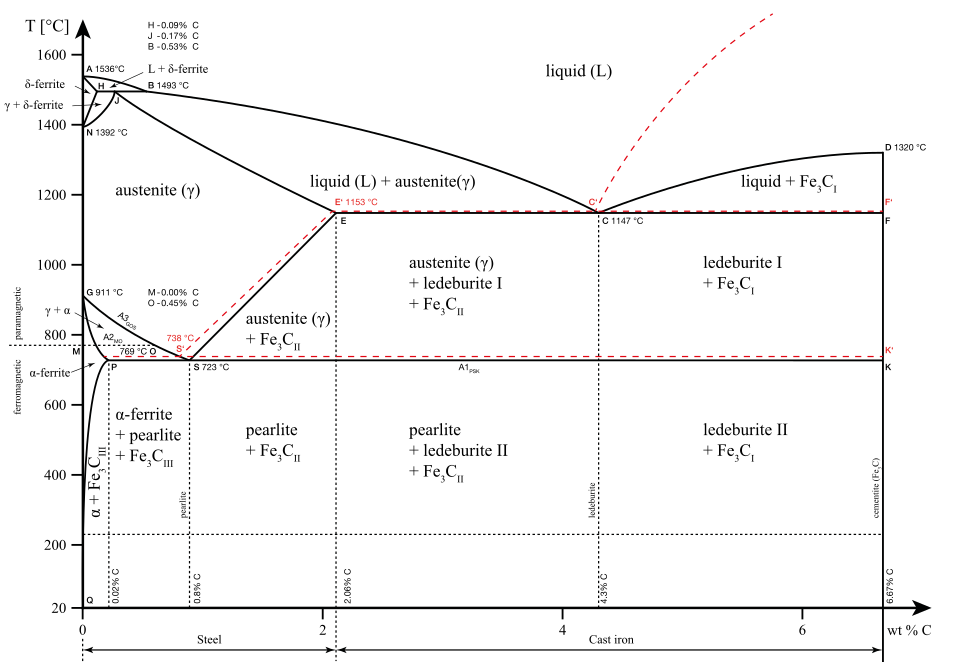
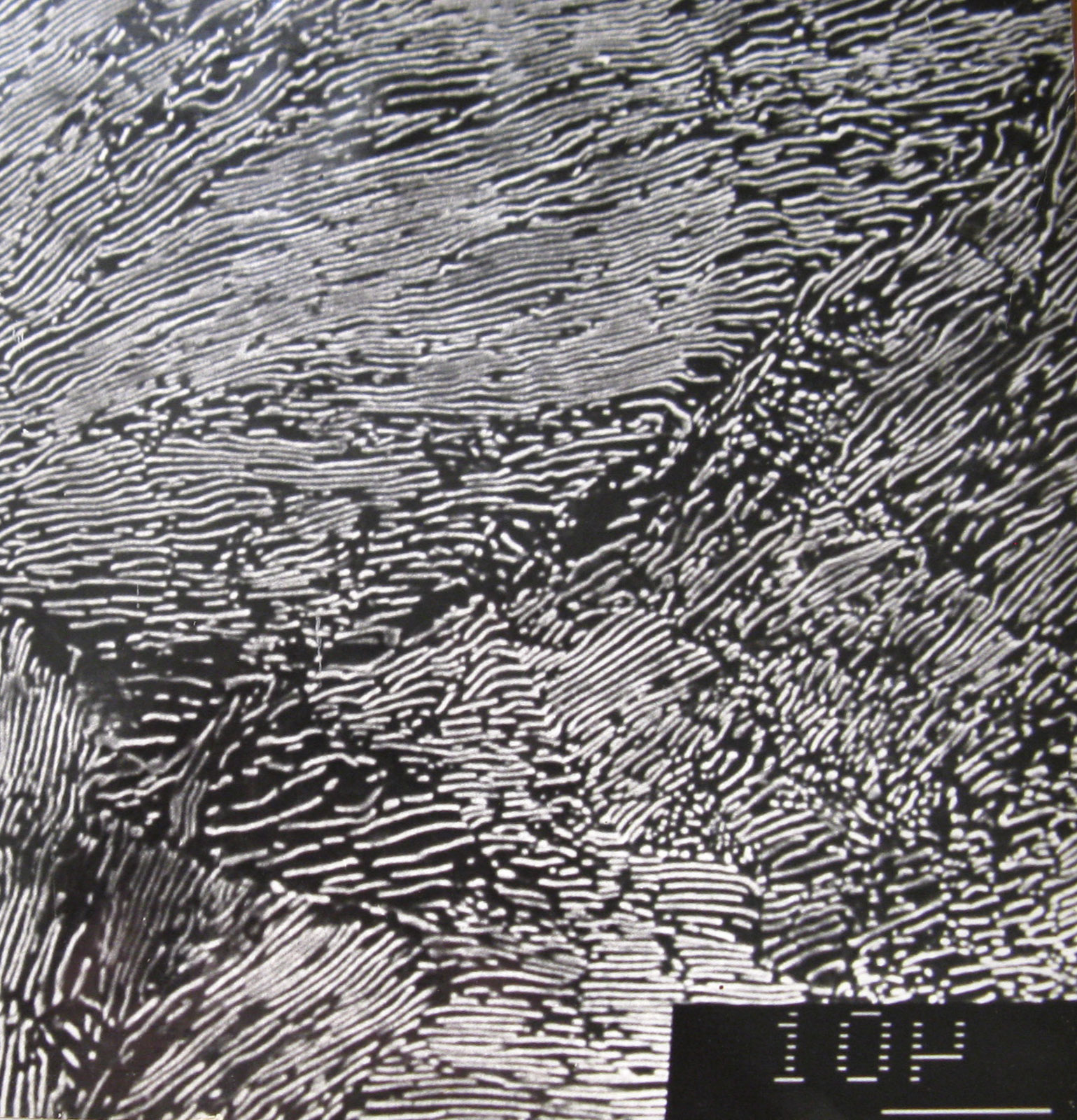
At room temperature, steel exists in a crystal structure called ferrite a body-centered cubic (BCC) arrangement of iron atoms. Ferrite is soft and ductile, which is why unhardened steel bends rather than snaps. The problem is that ferrite can only dissolve a tiny amount of carbon about 0.02%. The rest of the carbon gets pushed out and forms iron carbide (cementite), which combines with ferrite in alternating layers called pearlite. If you've ever looked at a polished and etched piece of annealed 1080 under a microscope, that fingerprint-like pattern you see is pearlite.
When you heat steel above its critical temperature (around 727°C for most carbon steels), something remarkable happens. The crystal structure transforms from BCC ferrite into a face-centered cubic (FCC) structure called austenite. Austenite can dissolve much more carbon (up to about 2%) which means all that cementite dissolves back into the iron matrix. The carbon atoms sit in the gaps between the larger iron atoms, waiting to play their role.
This is where the magic of quenching comes in. If you cool austenite slowly, the carbon has time to diffuse out and reform pearlite you're back to a soft blade. But if you quench rapidly in oil or water, the carbon atoms get trapped. The crystal structure tries to snap back to BCC, but with all that carbon locked in place, it can't form a proper cubic lattice. Instead, it distorts into a body-centered tetragonal (BCT) structure and this is martensite. Martensite is incredibly hard because those trapped carbon atoms create internal stress that resists deformation. This is exactly what gives a properly hardened blade its ability to hold a keen edge.
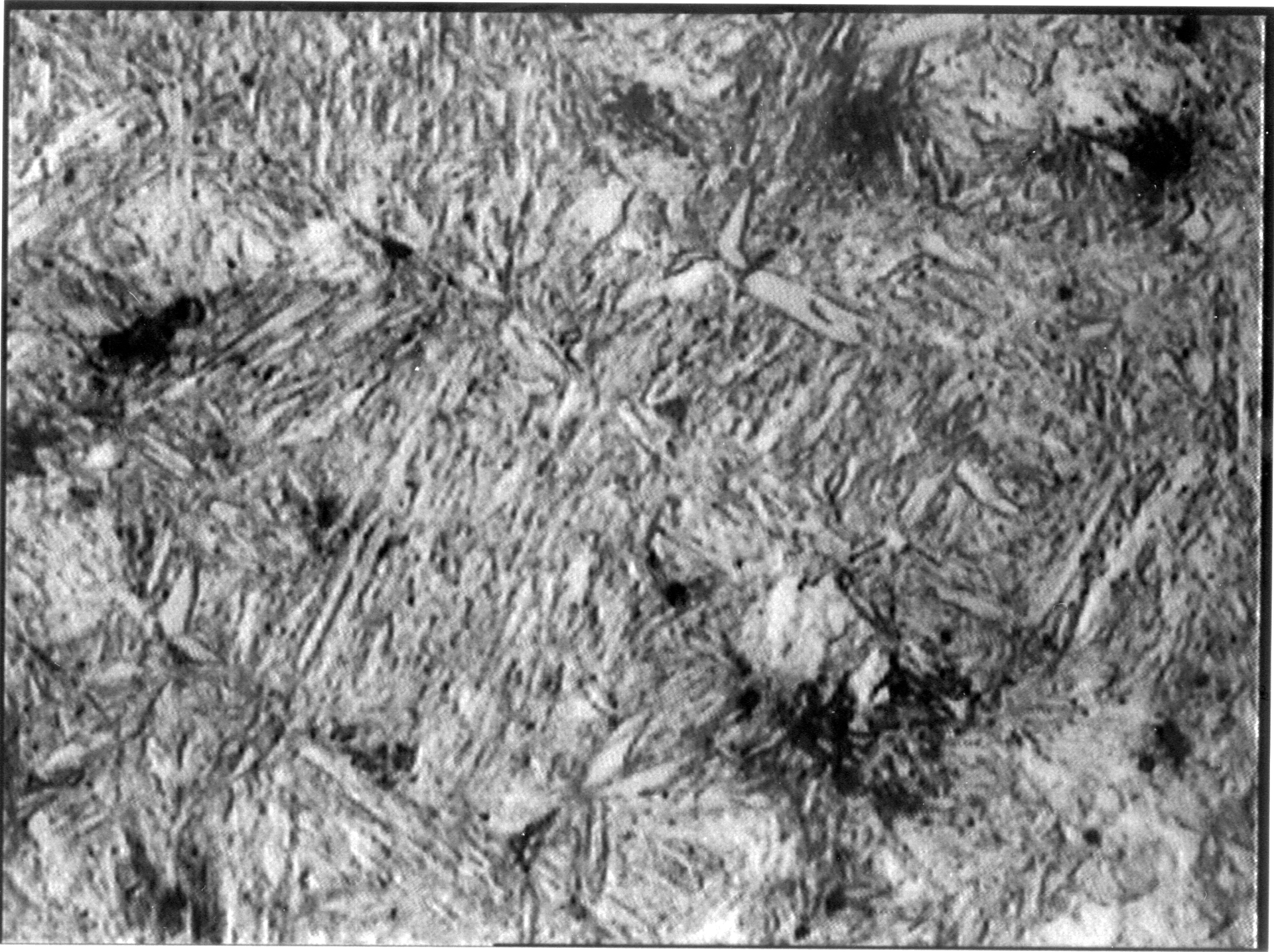
The amount of carbon in your steel directly determines how much martensite you can form and how hard it gets. This is why 1080 (0.80% carbon) hardens so well it has enough carbon to form plenty of martensite, but not so much that the blade becomes glass-brittle. Steels like 80CrV2 take this a step further: the small additions of chromium and vanadium form very fine carbide particles that pin the grain boundaries during heat treatment. These tiny carbides act like anchors, preventing the crystal grains from growing too large. Finer grains mean a tougher blade that can take more abuse without chipping and that's a big part of why 80CrV2 has become my go-to steel.
After quenching, your blade is full of martensite hard, but also stressed and brittle. Tempering at around 200°C allows some of that internal stress to relax without losing too much hardness. A small amount of the carbon precipitates out of the martensite as tiny carbide particles, which slightly softens the steel but dramatically increases its toughness. Finding the right tempering temperature is a balancing act, and it's one of those things that becomes intuitive with practice.
Master One Steel Before Moving On
One of the best pieces of advice I ever received was to pick one steel and truly master it before branching out. It's tempting to try every alloy you read about, but you learn so much more by sticking with a single steel through dozens of blades. You start to feel when the temperature is right just by watching the color. You know exactly how it moves under the hammer, how it responds to different quench oils, and how it behaves at various tempering temperatures.
For me, that steel is 80CrV2. I've forged more blades in this steel than anything else, and I'm still learning its nuances. The deep knowledge of steeks only comes from repetition and focused attention on one material. Once you've built that foundation, switching to a new steel becomes a matter of adjusting a few variables rather than starting from scratch.
If you're just starting out, I'd recommend the same approach. Pick either 1080 or 80CrV2, forge at least ten to fifteen blades with it, and really pay attention to how it behaves at every stage. Keep notes on your heat treatment temperatures, quench times, and tempering cycles.
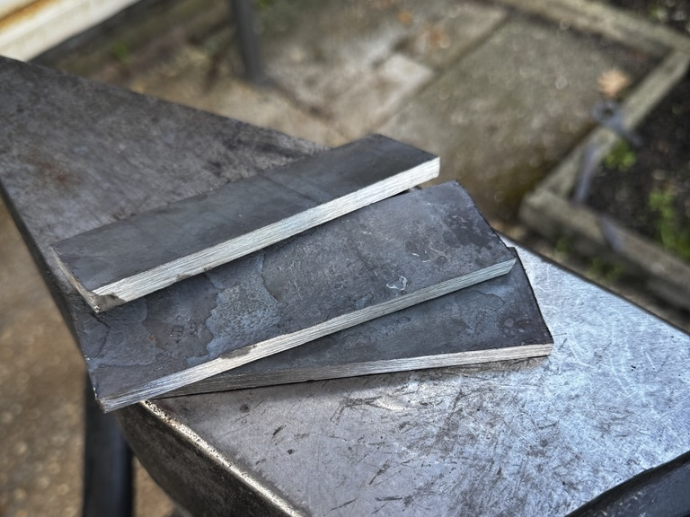
Where to Source Your Steel
Finding the right steel can be almost as tricky as choosing it. For those of us in the Netherlands and Europe, I've had good experiences ordering Eurotechni or Dictum. Look for suppliers that provide steel with known composition and proper certification you want to know exactly what you're working with. Avoid mystery steel from scrapyards for your first projects. It might seem economical, but the uncertainty makes it hard to learn, since you won't know whether a failed heat treatment is your technique or the steel's composition.
That said, once you've built some confidence with known steels, experimenting with reclaimed materials can be incredibly rewarding as I wrote about in my post on wrought iron, there's something special about giving old steel a new life.
Final Thoughts
Choosing your first steel doesn't need to be complicated. Start with 1080 or 80CrV2, learn how they behave under the hammer and during heat treatment, and build from there. And take it from me: mastering one steel is worth more than dabbling in a dozen. Every steel has its own personality, and part of the joy of knife-making is getting to know each one through hands-on experience. You'll learn more from one afternoon at the anvil than from weeks of reading specs online.
Happy forging, and feel free to commission a custom knife or reach out if you have any questions about getting started!