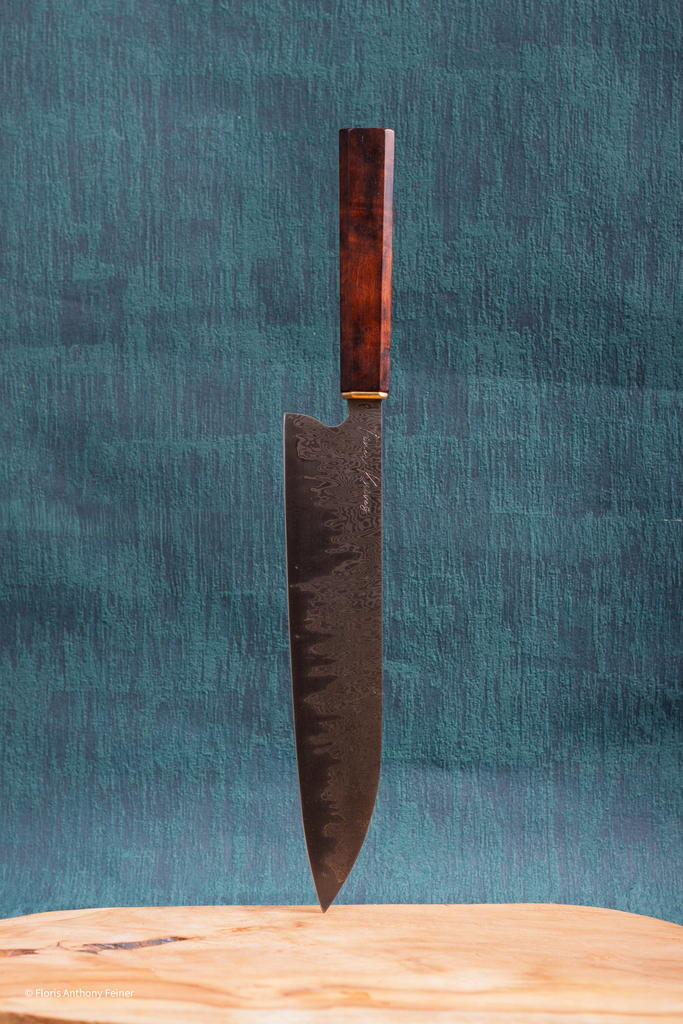
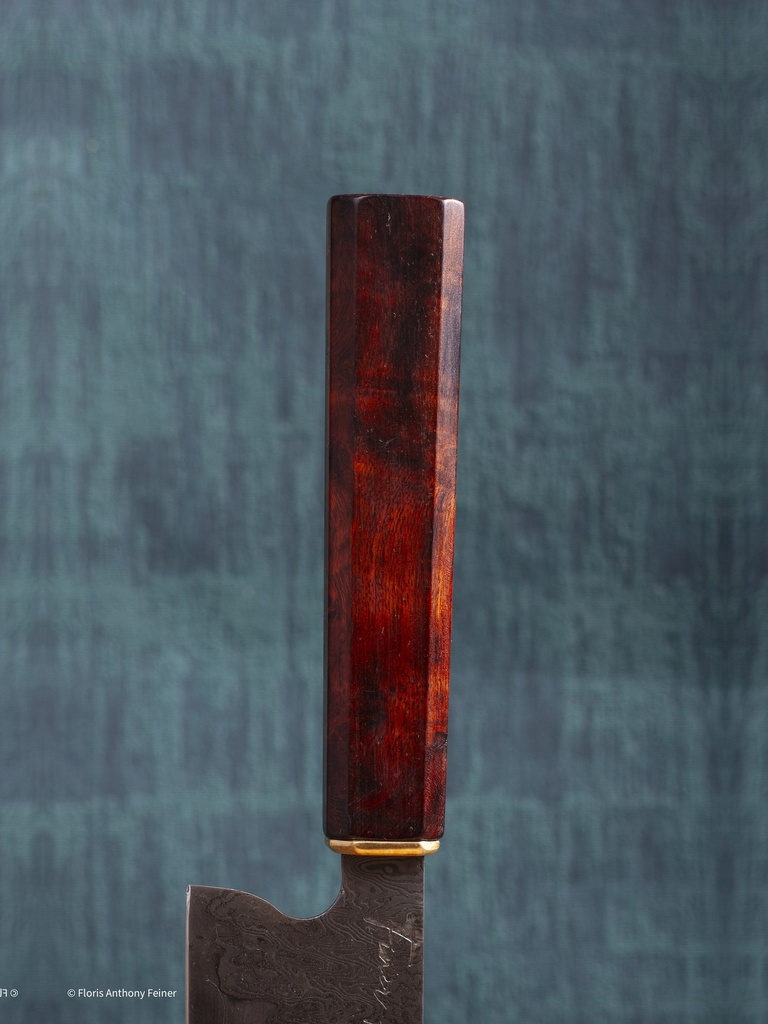
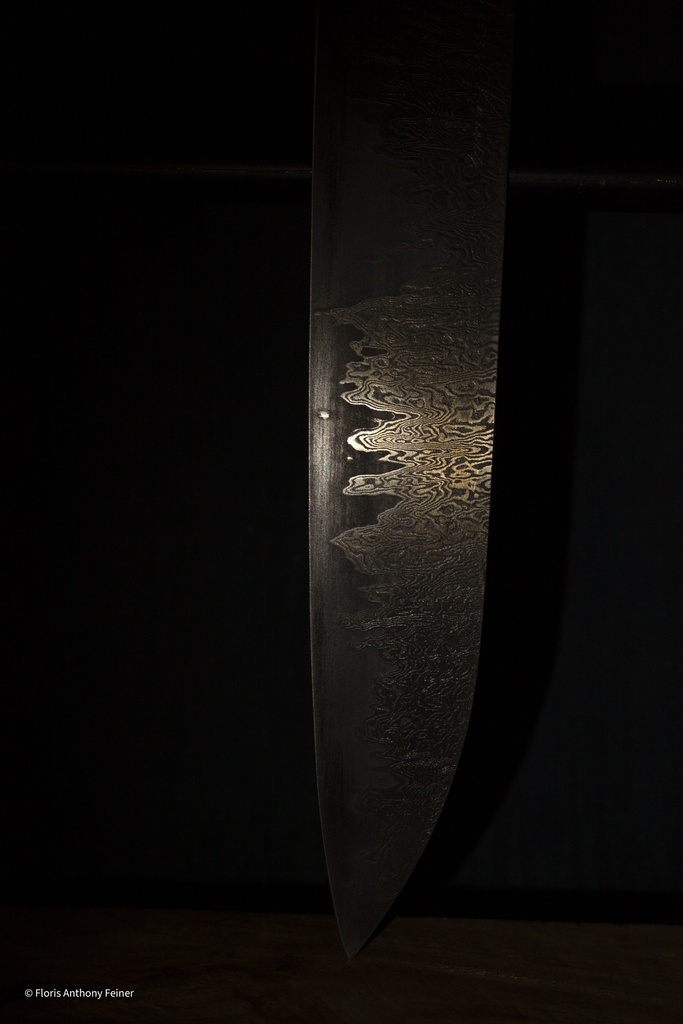
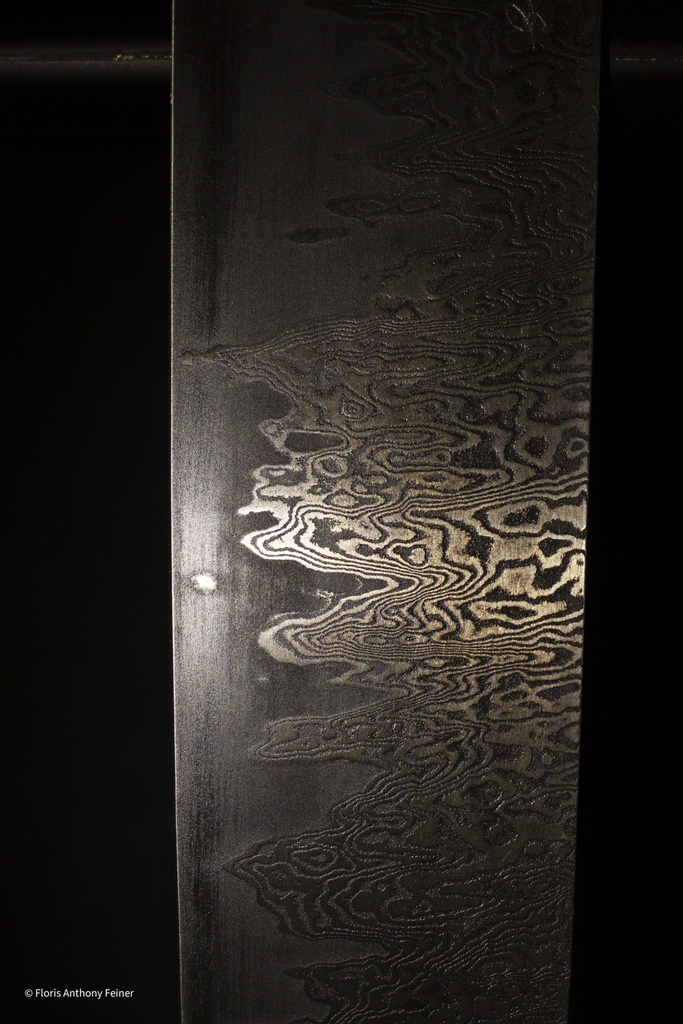
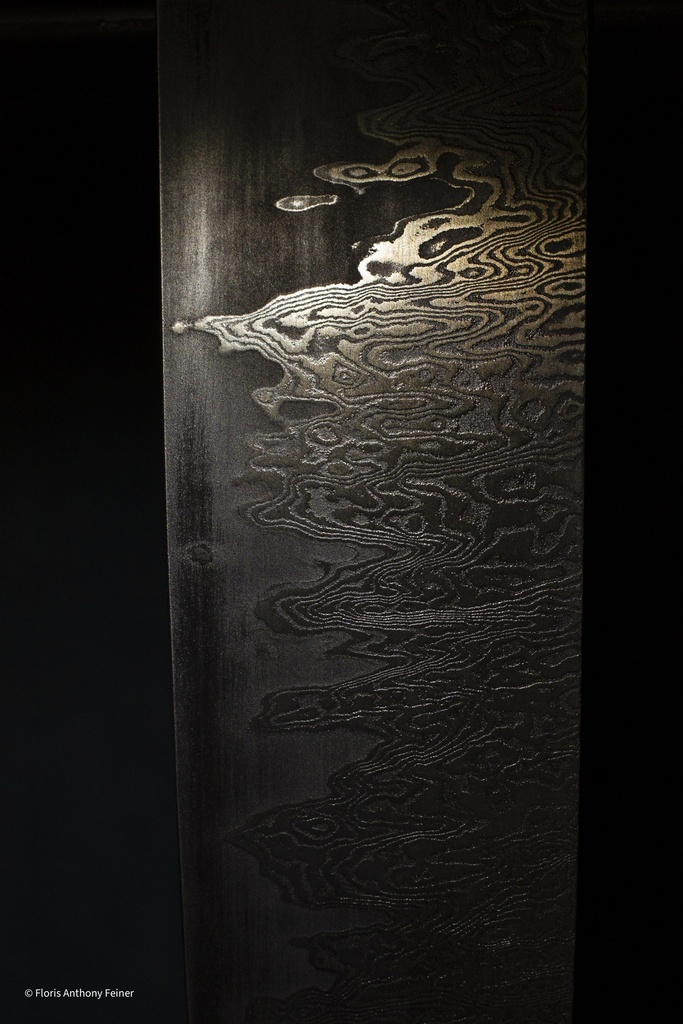
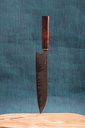
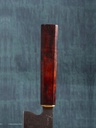
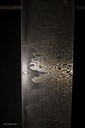
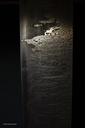
A chef's knife with an 80CrV2 core and damascus cladding, forged by hand in Groningen. 80CrV2 is a high-carbon steel with some chromium and vanadium. The edge comes out fine, and the steel rusts if you leave it wet. The cladding is damascus forged from layers of 80CrV2 and 15N20. 15N20 is a steel with nickel, so it stays bright in the acid bath called etching while the 80CrV2 turns darker, and that contrast shows the pattern. I never know exactly what I will get, and the swirls on this one came out better than I hoped. The handle is desert ironwood, a wood so dense it sinks in water, cut octagonal so it sits well in a pinch grip. The brass ferrule between blade and handle is fitted with an heirloom fit. I round the edges so wood and brass flow into each other, with no step between them.
Care
Wash by hand and dry the knife after use, with the cotton cloth it came in or a dishcloth. Carbon steel can rust and discolour. The darker layer that forms is called patina, and it protects the steel and gives your knife its character. Never leave acids on the blade, they discolour it and destroy the patina. Hone the edge with a honing steel just before or right after use.